Visit the new CME and conference page! 

Blog:
Vishuddha Voices

Community WISDOM
Connection, presence and Growth
Oct 23 • Siri Chand Khalsa MD

Like the Weather: Beginning a Stillness Practice

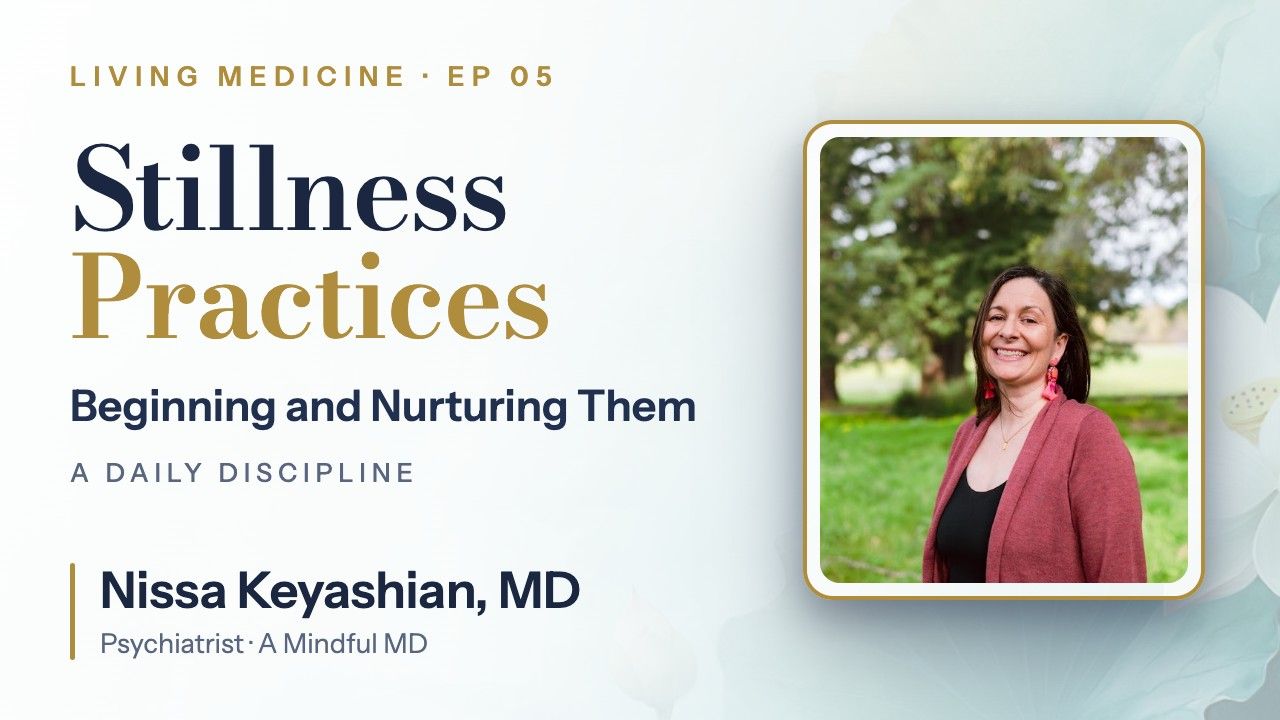
Psychiatrist Dr. Nissa Keyashian on the two wings of stillness, mindfulness and self-compassion, and a simple practice for hard moments.
Dr. Nissa Keyashian, Beginning and Nurturing Stillness Practices
Beginning and Nurturing Stillness Practices
Content note. This session includes a guided practice and touches on depression, anxiety and grief. Take what feels right.

How Do You Begin a Stillness Practice?

Right now there is sunshine. Tomorrow there might be clouds. Dr. Nissa Keyashian offered that image in the middle of her practice, and it has stayed with me. Feelings move through us like weather... they pass, and we remain.
Her path to stillness began far from a retreat. In 2008 she matched into an internal medicine residency at UC Davis. She had entered medical school wanting to be a psychiatrist, and she knew quickly she was in the wrong place. She left, and depression and anxiety followed.
Dr. Nissa Keyashian
Meet the speaker

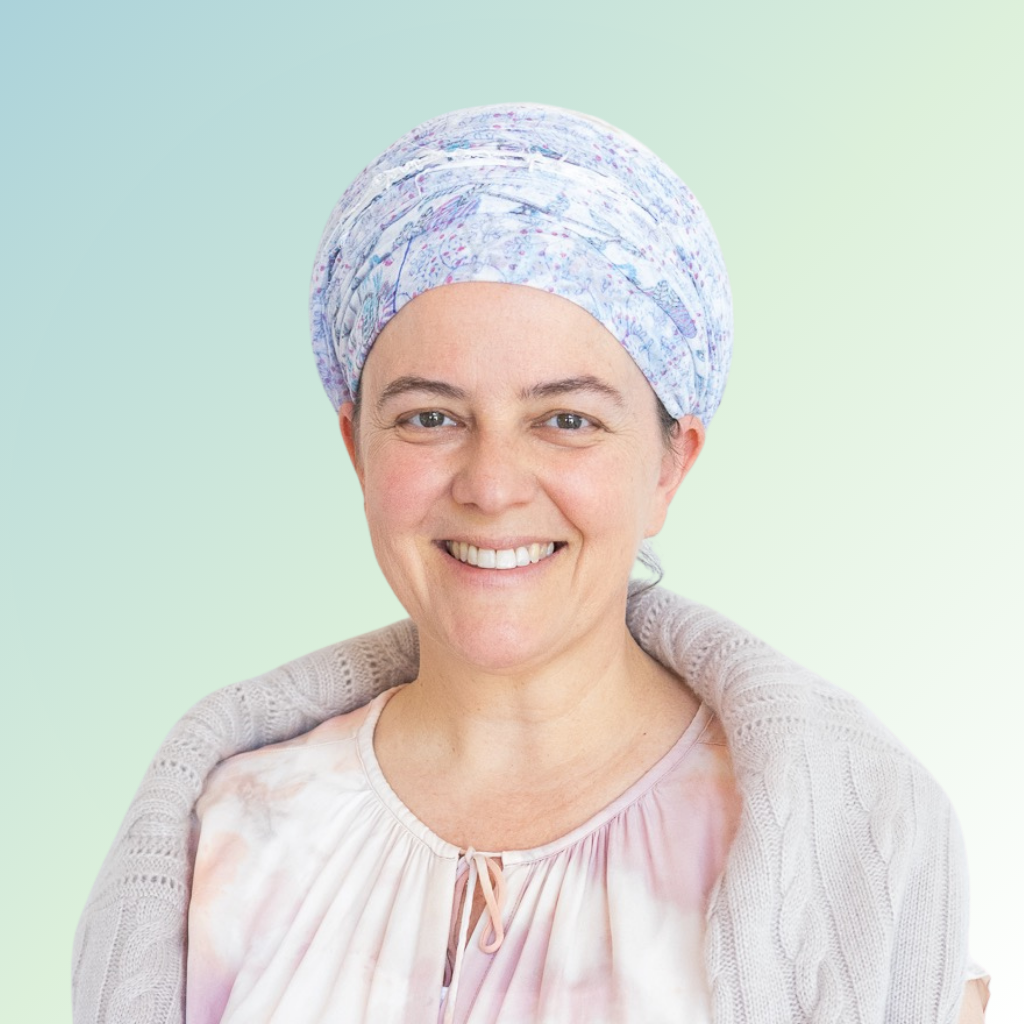
Dr. Nissa Keyashian, MD

Psychiatrist · Creator, A Mindful MD · Yoga teacher

Nissa is a psychiatrist in private practice in San Jose and the creator of A Mindful MD. She is the author of Practicing Stillness, which weaves yoga and meditation together with psychotherapeutic principles, and she is a physician coach and yoga teacher.

nissakeyashian.com →
A book was waiting nearby, Calming Your Anxious Mind. She started reading. Then she started meditating. She has since completed her 500 hour yoga teacher training, and in 2022 she wrote her own book, Practicing Stillness.

What Are the Seven Principles of Mindfulness?

What caught her in that first book was a short list. Seven principles of mindfulness... acceptance, patience, trust, letting go, beginner's mind, non-striving and non-judging.
Reading them, she realized she had been living in opposition to every one. Some wisdom deep inside her knew she needed them as a balance.
She found her way back to psychiatry. In residency, a psychologist ran a mindfulness based stress reduction group, and she sent him so many patients that he invited her to join. After training, she completed a clinicians' mindfulness program led by Greg Serpa and Dr. Christiane Wolf of InsightLA. She has woven that work into her practice ever since.

You're a human being, not a human doing.

She also carries a teaching she has heard from many spiritual teachers. If mindfulness is one wing of the bird, self-compassion is the other. That image held the whole session.

Get the next recap in your inbox.

One letter after each Living Medicine talk. Unsubscribe anytime.
Thank you. The next recap is on its way.

Why Does the Mind Keep Drifting to the Past and Future?

Many of Nissa's patients arrive caught in time. Ruminating on something past. Worrying, planning, scheduling for what has not happened yet.
Her frame is simple. The only moment we have is this one. The past and the future are thoughts in the head, and we cannot touch them.
She described the thinking mind as rooted in time. It helps us plan and function, and lived in all day, it causes suffering. An old saying she loves puts it well... the mind makes an excellent servant and a poor master.
The way out runs through the body. When we feel the sensations happening right now, we step out of time. She described this as a move from the left brain thinking mind toward the right brain, where much of our joy lives.
She connected this to Internal Family Systems, the model developed by Dr. Richard Schwartz. In that model, our higher self is marked by eight qualities:
  • Calm and clarity
  • Compassion and connection
  • Courage and confidence
  • Curiosity and creativity
She is careful about evidence and likes to bring real neuroscience into this work. She noted that polyvagal theory, quoted often in these spaces, does not have strong scientific support.

Mindfulness is one wing. Self-compassion is the other.

How Do You Start Meditating?

Then she led us into practice. She began with permission. Sit, lie down, stand or walk. Eyes closed, or open with a soft, lowered gaze. If you are driving, simply listen and come back later.
She invited small movements first. Side stretches, a twist or two, opening the jaw wide, neck circles, a few rounds of cat and cow to warm the spine. Our bodies often know what they need to feel balanced.
Then the breath. Feeling it, more than thinking about it. Where is it most pleasant... the belly, the chest, the nose or mouth? When attention drifted to the day's tasks, she asked us to come back kindly. The mind makes thoughts the way the mouth makes saliva, she reminded us. Nothing is wrong. It is just what minds do.

What Is a Self-Compassion Break?

From there she guided the self-compassion break developed by Dr. Kristin Neff. We brought to mind a recent challenge, at work, in a relationship, or something ahead. Then four steps. Tap each one to read more.
01Soothing touch.

A loving squeeze of your own hands in your lap, which no one in a busy room needs to notice. Or a hug, one hand on the heart and one on the belly, a gentle rub of the thighs.

02Name what is here.

One word for the feeling, phrased as "there is." There is anxiety. There is sadness. Like weather, it is present now and can pass. A temporary feeling does not have to become a story about who we are.

03Remember common humanity.

You are not the first person to struggle at work or in a marriage, and you will not be the last. Millions of people, perhaps billions, are facing something like it right now.

04Offer a loving word.

Ask what the most loving thing you could say to yourself might be. If nothing comes, imagine what a loving person or teacher in your life would say.

Nissa shared the words she uses for herself, a promise to keep showing up. On days when the full practice feels like too much, she does only the touch and the loving word. That is enough.
We closed by returning to the breath. In and out, like waves in the ocean.

Why Does Self-Compassion Feel Awkward at First?

One line stayed with me. Self-compassion can feel strange at first, and Nissa's advice was simple: "I would let it feel weird and cheesy."
Practice it when you are feeling okay. Then it is easier to reach when things are hard.
She also spoke to what comes after a practice. Parents and caregivers tend to jump straight to the next thing. If you can, transition slowly. Take a couple of deep, cleansing breaths. If there is no time now, promise yourself time later... a walk outside, a little journaling, another meditation or a moving one.

How Do Yoga and Breathwork Support Healing?

Nissa reminded us how much larger yoga is than the physical practice. The classical teachings describe eight limbs, and posture is only one of them. She noted that until around the year 1200, posture simply meant a steady, comfortable seat for meditation. Breath, ethics and meditation were always part of the whole.
Her own work now reaches past the seated practice too. She leads neurodynamic breathwork, built on the same principles as the holotropic breathwork developed by psychiatrist Dr. Stan Grof, in a shorter format that can be done online. It uses high ventilation breathing, which is different from hyperventilation, with a specific set of music. The thinking is that it may quiet the default mode network, the steady chatter of the thinking mind.
The first time she tried it, chatter that usually took her a couple of days on a silent retreat to settle went quiet in 15 to 20 minutes.
She is also finishing certification in tension and trauma releasing exercises, known as TRE. And she has seen breathwork help people carry grief. It can release emotion that is hard to let out, so what is present moves through instead of getting stuck.

How Does Self-Compassion Build Resilience?
Nissa closed where she began, with the two wings.
We are blessed with people in our lives, she said, and the one person we will always have is ourselves. If we can nurture an unconditional, loving relationship with ourselves, simply because we exist and regardless of what we accomplish, our resilience grows. From there, we can be the change we want to see.
Earlier, I had asked about our resistance to growth. Her answer was gentle. Bring kind awareness to the resistance too. The mountain is you.
The weather will keep changing... and the mountain stays.

Know a colleague who could use this? Please pass it along.

Siri Chand Khalsa MD
Written by

Siri Chand Khalsa MD

Siri Chand is board certified in internal, integrative, lifestyle, and hospice and palliative medicine, with nearly 30 years of clinical practice. She founded Vishuddha to build the community medicine denied women physicians. The Living Medicine Series is one way we gather.

P.S. If something here stayed with you, the full conversation goes deeper. The whole talk is in the Living Medicine Series →
Medicine trained many of us to give care and rarely to receive it. I created this series so women physicians have a place to learn from each other and feel met.
With love, Siri Chand
From Dr. Keyashian's talk

Questions to sit with

  1. If you named what you are feeling right now as weather, what would it be? What shifts when you say "there is" instead of "I am"?
  2. When did you last offer yourself a soothing touch? What would the most loving person in your life say to you today?

Choose one quiet hour this week. Watch the talk, then answer the first prompt.

Full conversation and companion worksheet in the Living Medicine Series.

Watch Dr. Keyashian's talk

More from the Living Medicine Series

See every talk →
Write your awesome label here.

Learn with our experts. 

We will help you explore and build your core insight and knowledge about yourself and the work you do in this world.
The Vishuddha app

Read on the go.

Every Living Medicine recap, talk and companion worksheet, in your pocket. Read between patients, on the train, or wherever you find a quiet minute.
Dr. Nissa Keyashian
Living Medicine, Episode 6