Visit the new CME and conference page! 

Blog:
Vishuddha Voices

Community WISDOM
Connection, presence and Growth
Oct 22 • Siri Chand Khalsa MD

The Sunday Stew: Cultural Foods and Why Diet Advice Fails

Dr. Marissa Toussaint on why idealized diet advice so often fails, and how small changes to cultural meals help patients stay with them.
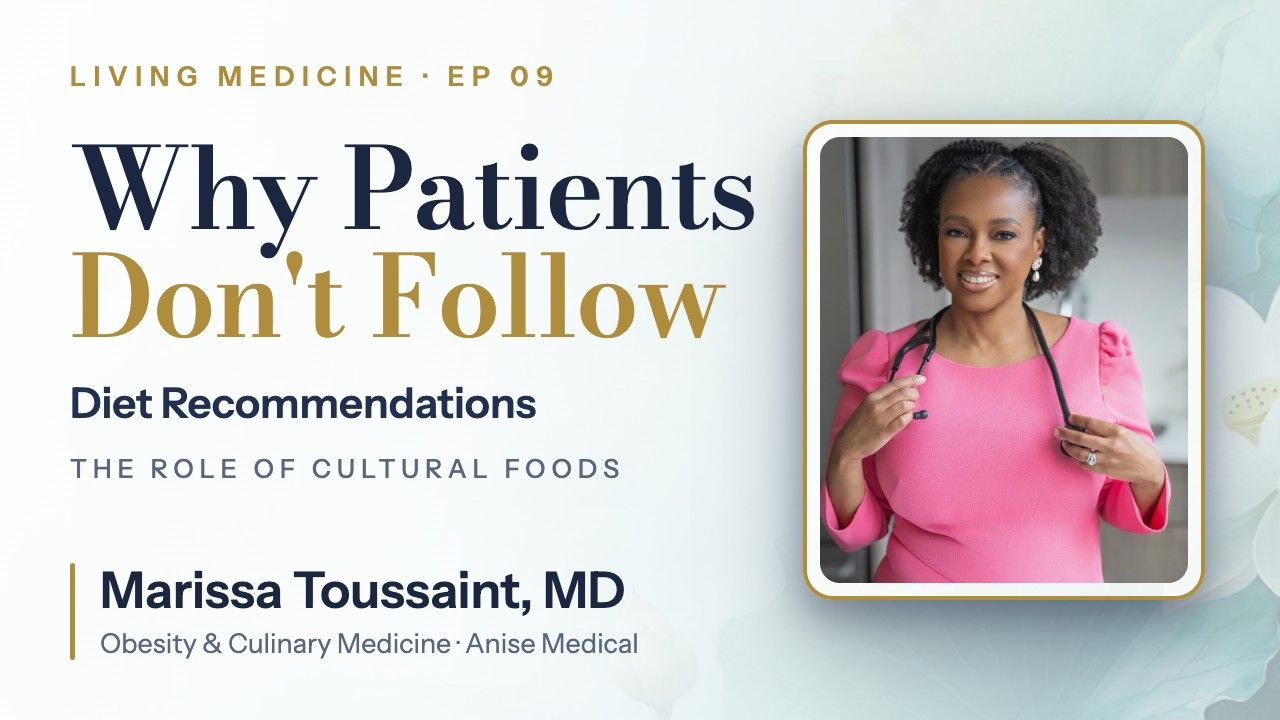
Dr. Marissa Toussaint, Why Patients Don't Follow Diet Recommendations
Why Patients Don't Follow Diet Recommendations

Why Don't Patients Follow Diet Advice?

A pot of stew on a Sunday. Oxtail, broth, something simmering for hours... a kitchen that smells like home, even in a country that once felt strange.
That pot sat at the center of Dr. Marissa Toussaint's talk. It was there before the framework and the evidence, and it stayed with me long after.
Dr. Marissa Toussaint
Meet the speaker

Dr. Marissa Toussaint, MD

Obesity & Culinary Medicine · Author, Flambeau Kitchen

Marissa grew up in Trinidad and has practiced medicine for 20 years. She runs a direct pay obesity medicine and primary care practice in Brooklyn, is board certified in obesity medicine and culinary medicine, and wrote Flambeau Kitchen, a Caribbean inspired cookbook and health guide.

flambeaukitchen.com →
Her question was a simple one. Why do patients nod politely at our diet advice and then not follow it?

How Does Culture Shape What Patients Eat?

Marissa began with a reframe. Many patients understand exactly what they are being told to do. Knowledge is rarely what is missing.
Food choices are shaped by much more than preference. Cultural traditions decide what is eaten and how it is cooked. Money decides what can be bought, reached and prepared. And when patients never see their own foods in nutrition counseling, the advice can feel unfamiliar and out of reach.
Then she widened it further. Food holds memory and family. It carries identity, ritual, love and belonging. For many patients, especially immigrants, food is how they stay connected to home.

A generic handout replaced a conversation.

So when we hand someone an idealized diet that replaces everything they know, we are asking for more than a change in ingredients. We are asking them to set down a piece of who they are. Most people cannot do that for long, and many should not have to.

Get the next recap in your inbox.

One letter after each Living Medicine talk. Unsubscribe anytime.
Thank you. The next recap is on its way.

What Does the Research Say About Heritage Diets?

Marissa named a gap in our own training first. Most physicians receive very little nutrition education, and even less on how different communities eat, shop and cook.
  • Less than 20 hours of nutrition education across four years of medical school.
  • The Mediterranean diet is one of the most studied patterns, associated with lower all cause mortality and better metabolic health.
  • High intake of ultra processed foods is associated with obesity, diabetes, cardiovascular risk and higher mortality.
  • In the United States, food insecurity rates are substantially higher among Black and Hispanic households than among white households.
  • The hunger vital sign is a validated two question screener for food insecurity.
She was clear that the Mediterranean diet works. The challenge is helping patients apply its principles with foods they can actually reach. The organization Old Ways adapted the Mediterranean pyramid for the heritage diets of Africa, Asia and Latin America. Those diets differ in ingredients and methods, and they share what matters... many plants, legumes, whole grains or tubers, fruit, modest animal protein, and little reliance on highly processed products.
Caribbean diets, she noted, grow from African, Indigenous, Asian and European traditions. They are understudied, and are often filed under the Latin American and African heritage diets. Those are the pyramids she would bring into the room.

Food is more than fuel. It is how many patients stay close to home.

What Happens When Diet Advice Ignores Culture?

Marissa told us about a patient she called Maria. A woman from Grenada, working two jobs, raising two children and caring for her mother. She came in for prediabetes and recent weight gain.
Her doctor told her to cut out rice, eat more salad and try the Mediterranean diet. He handed her the sheet. She nodded politely, and she did not come back.
No one had asked what she ate. There was no dietary history and no question about her food traditions. The advice was built on assumptions, and she was never invited into the decision.
Had anyone asked, Maria might have said this. Her food is her link to home. She has little time, energy or money for sweeping change. Cooking at home already feels like proof of health to her. And at times she has felt her culture dismissed in the exam room.

How Do You Give Culturally Sensitive Nutrition Counseling?

Many of us assume this kind of counseling needs a long visit. Marissa said a few targeted questions can fit into an ordinary appointment. Tap each step to read more.
01Ask before you advise.

Gather the dietary history without judgment. Learn what is eaten, who cooks, how food is obtained, and which dishes carry family meaning.

02Take an inventory.

Name the strengths already present, such as whole food cooking, legumes and vegetables. Then name what adds risk, such as ultra processed foods, extra sodium, fat or sugar, and larger portions.

03Offer practical changes.

Adjust ingredients, portions or cooking methods. Lean toward adding rather than taking away.

04Set goals together.

Choose one SMART goal that is specific, achievable and true to the patient's own priorities. Goals patients choose themselves tend to last longer.

She noted that the advice in a good visit may end up much the same as in a poor one. The difference is the process... curiosity first, then collaboration.

How Do You Estimate Portions in One-Pot Meals?

One teaching has changed how I think about portion advice. Many cultures cook in one pot. Soups, stews, pelau, biryani, gumbo. The ingredients are combined before the meal is served, so you cannot simply move the rice to one side of the plate.
So Marissa asks about the recipe instead. How much grain, how many vegetables, how many legumes, how much protein go into the pot? That tells you more about the meal than any portion size.
Preparation matters too. Roasting, braising, frying and steaming can turn the same food into very different meals. Calories, fat, texture and fullness all shift with the method. Knowing how something is cooked is as useful as knowing what it is.

How Does Immigration Change Diet Quality?

Marissa widened the lens to what happens over time. Many immigrants arrive in the United States eating legumes, vegetables, whole grains and minimally processed foods. The longer they stay, the more diet quality tends to decline, and the more obesity and chronic disease rise. Time pressure pushes people toward convenience foods.
So she asks a gentle question. Have you drifted from the way you used to eat?
She also asks about food security. Ultra processed foods may be the convenient, shelf stable and cheap choice for families without steady access to good food, and counseling has to honor that. Patients who screen positive can be connected to resources through the free Find Help website. Frozen or canned vegetables can be affordable, nourishing alternatives to fresh produce.
Small changes, she said, are often more realistic and sustainable than a complete overhaul.

How Can Traditional Recipes Be Made Healthier?
Then Marissa returned to Maria, and to the pot.
This time the visit began with questions. Maria loves to make a traditional oxtail stew every Sunday. The meal is home cooked and built on whole foods. It is also high in saturated fat and low in fiber, with some added oil.
Together they found a change that kept the dish. Every Sunday that month, Maria would make the stew with chicken instead of oxtail and add two pounds of vegetables, legumes or both to the broth. She added tomatoes, lima beans and greens at the base.
Marissa showed the stew before and after. Still recognizable, still hers... leaner, with more fiber and more color.
In her words, our role "is not to replace cultural foods, but to understand them." Heritage diets often already hold what we hope to prescribe. Our work is to notice it, and to build from there.

Know a colleague who could use this? Please pass it along.

Siri Chand Khalsa MD
Written by

Siri Chand Khalsa MD

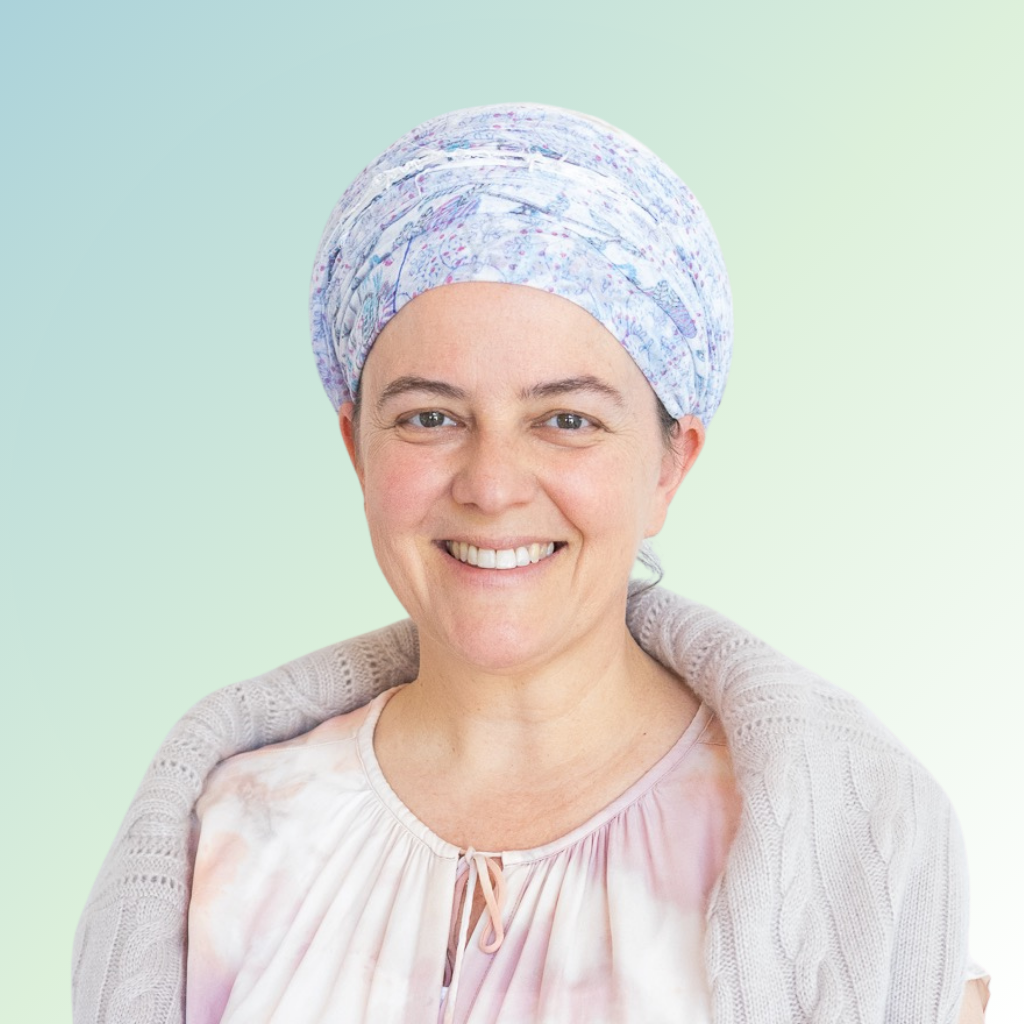
Siri Chand is board certified in internal, integrative, lifestyle, and hospice and palliative medicine, with nearly 30 years of clinical practice. She founded Vishuddha to build the community medicine denied women physicians. The Living Medicine Series is one way we gather.

P.S. If something here stayed with you, the full conversation goes deeper. The whole talk is in the Living Medicine Series →
Medicine trained many of us to give care and rarely to receive it. I created this series so women physicians have a place to learn from each other and feel met.
With love, Siri Chand
From Dr. Toussaint's talk

Questions to sit with

  1. Which of your patients' foods have you never asked about? What might you learn from one question about the pot on their stove?
  2. Where have you drifted from the way your own family cooked? What small addition could bring some of it back?

Choose one quiet hour this week. Watch the talk, then answer the first prompt.

Full conversation and companion worksheet in the Living Medicine Series.

Watch Dr. Toussaint's talk
More from the Living Medicine Series

See every talk →
Write your awesome label here.

Learn with our experts. 

We will help you explore and build your core insight and knowledge about yourself and the work you do in this world.
The Vishuddha app

Read on the go.

Every Living Medicine recap, talk and companion worksheet, in your pocket. Read between patients, on the train, or wherever you find a quiet minute.
Dr. Marissa Toussaint
Living Medicine, Episode 5

Catch Up With Recent Blog Posts